


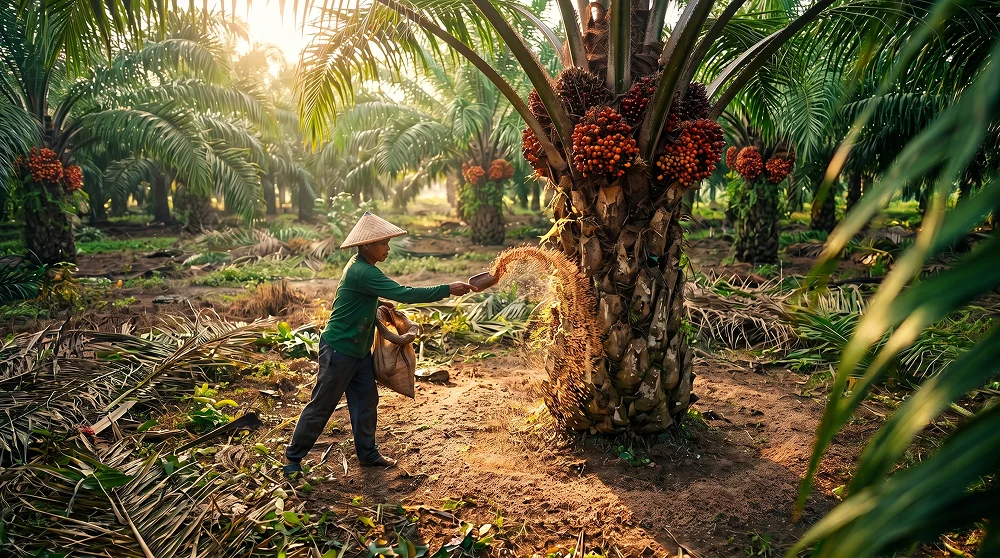
Fertilization is one of the most critical aspects of oil palm plantation management. Its primary goal is to supply the essential nutrients required for healthy palm growth and optimal Fresh Fruit Bunch (FFB) yields. However, effectiveness isn't just about the quantity of fertilizer applied. The 5T principles of fertilization: Right Type (Tepat jenis), Right Dosage (Tepat dosis), Right Timing (Tepat waktu), Right Method (Tepat cara), and Right Placement (Tepat tempat) is crucial to ensure nutrients are absorbed efficiently by the palms.
A study covering 977 smallholder oil palm plantations in Indonesia revealed that nutrient application remains insufficient and unbalanced. The research also highlighted that fertilizer placement and application schedules often deviate from ideal recommendationsLim et al., 2023These findings emphasize that fertilization outcomes depend not only on the volume of fertilizer used, but heavily on proper execution in the field.
So, what key factors should be addressed to achieve precise and efficient fertilization?
- Select the Right Fertilizer Type Based on Crop Stage
Nutritional requirements evolve across different growth stages. Palms in the vegetative stage need strong nutrient support for root and frond development, whereas palms entering the generative stage require targeted nutrients for fruit formation. Fertilizer selection must account for crop stage, soil conditions, and specific field needs. Continuously applying a single formula without evaluation risks causing severe nutrient imbalances.
- Determine Dosage Based on Recommended Guidelines
Applying excess fertilizer does not automatically increase yields. Conversely, under-dosing leaves palms nutrient-deficient. Dosage should follow tailored recommendations that consider stand age, soil conditions, and target yields. Regular crop evaluations along with soil and leaf tissue analyses help establish highly accurate nutrient requirements.
- Optimize Application Timing
Timing directly impacts nutrient availability. Fertilization should adhere to a planned schedule while accounting for weather conditions. Avoid applying fertilizer immediately before heavy rain, as runoff can wash nutrients away from the root zone. Nutrient loss through leaching and surface runoff remains one of the greatest challenges in oil palm nutrient management.
- Apply Evenly Across the Active Root Zone
Fertilizer must be distributed evenly rather than dumped in piles or placed too close to the trunk base. Placement methods should adapt to field topography. On relatively flat terrain, spreading fertilizer evenly around the palm circle without burying it is sufficiently effective, as active feeder roots reside near the soil surface. On sloped or contoured land, however, burying fertilizer at four designated points around the palm contour helps prevent nutrient loss from water runoff.
- Continuously Evaluate Fertilization Outcomes
Maintain detailed logs of the fertilizer types, doses, application dates, and field blocks to evaluate program performance. Regularly monitor palm health and production trends. Insights from these evaluations should drive adjustments for subsequent fertilization cycles, rather than simply repeating past routines.
Effective fertilization requires structured planning and consistent execution. To support these needs, PT Weha Agro Sejahtera offers NPK Nagaemas in three specialized formulations: Nagaemas Hijau (NPK 16-16-16) formulated to support the vegetative stage, Nagaemas Biru (NPK 12-12-17-2) designed for the transition into fruit production and Nagaemas Merah (NPK 13-6-27-4 + 0.65B) tailored for the peak generative (fruiting) stage. Selecting the right formula aligned with crop growth stages, field recommendations, and local plantation conditions ensures palm nutritional needs are met optimally.